

The Maharashtra police has booked Indiabulls group companies, including its flagship Indiabulls Housing Finance (IBHL), for allegedly siphoning off funds and for accounting irregularities committed by the promoters and directors of the company between 2014 and 2020. A first information report was registered by the Palghar police on April 13 under various sections of Indian Penal Code dealing with cheating, fraud and criminal conspiracy. The move comes after Palghar's judicial magistrate passed an order under Section 156 (3) of the Code of Criminal Procedure (power to direct police/agency to investigate the matter), following a complaint filed by Ashutosh Kamble, a shareholder of IBHL.

'Quite a few notices have been issued in both black money and benami transactions.'

The government is considering a provision to provide an exit window to holders of cryptocurrencies (cryptos), keeping in mind that banning them outright could deal a blow to investors sitting on them for years. According to sources in the government, the framework in the making may propose a grace period of three to six months for investors before prohibiting the possession, trading, mining, and issuing of cryptos. A group of secretaries chaired by the Cabinet secretary is learnt to have met in mid-March and discussed issues associated with cryptos, including the consequences of banning them and also on possible substitutes of blockchain technology - an advanced technology Bitcoin uses.

The idea is to do away with the need for the approval of the Core Group of Secretaries on Divestment for privatisation of companies, especially in non-strategic sectors.

'The Insolvency and Bankruptcy Code cleans up non-performing assets and puts companies in capable and credible hands.'

Sebi had, in February, dropped allegations of fraudulent and unfair trade practices against NSE's former heads Ravi Narain and Chitra Ramakrishna in the co-lo case.

Till now, there was no provision in the Companies Act that allowed a remuneration for the non-executive director if the company was in loss or had inadequate profits. Only the executive director was entitled for a remuneration in the event of a loss.

The ministry of corporate affairs (MCA) has launched a probe into the books of Edelweiss Asset Reconstruction Company (EARC) following allegations by a whistleblower of fund diversion and irregularities. The whistleblower, Paras Kuhad, a former additional solicitor general of India, had written to the Prime Minister's Office and the Reserve Bank of India (RBI). Kuhad has alleged that Edelweiss Group and Caisse de depot et placement du Qubec (CDPQ), a Canadian institutional investor, which hold stakes in the ARC, diverted funds and did not adhere to norms while making investments in EARC's instruments. Sources have indicated that a probe has been initiated, but the MCA did not comment on the issue.

With just a few days left for the suspension on fresh corporate insolvency cases to end, government sources have indicated that another extension is unlikely. An extension may not be economically desirable as it hampers the restructuring prospects for stressed companies, according to senior officials. Also, it would be a challenge to amend the law in such a short time. A Bill would have to be passed in both Houses of Parliament, if any change, with respect to suspension of Insolvency and Bankruptcy Code (IBC), is to be made - including extension or creating any exceptions to the rule.

The government has brought in changes to the investment pattern for non-government provident funds, and superannuation and gratuity funds, enabling them to invest up to 5 per cent in the units of Category I and Category II alternative investment funds (AIFs), subject to some caveats. The development is part of the central government's strategy to channelise domestic savings and improve their returns to attract more investment in the said sectors. At present, these funds typically invest a minimum 45 per cent in government securities, besides new instruments, such as exchange-traded funds and real estate investment funds, while a portion in equity-related instruments.

Government-controlled oil-marketing companies (OMCs) have held back petrol and diesel price revisions for a week and are expected to continue doing so, ostensibly owing to political reasons. It appears that the Centre has informally conveyed to the three major OMCs to not revise fuel prices for the time being, two people in the government said. This informal directive follows the talks between the Centre and states on cutting taxes and bringing the auto fuels under the good service tax regime not fetching the desired results, so far.

Sources said about hundreds of companies, including Facebook and Amazon, could seek tax refund because they import software for sale in India.

The Centre is likely to privatise profit-making enterprises, reversing its previous position of first closing or merging loss-making state-run units. The NITI Aayog, which is in the process of selecting public sector units for privatisation, is likely to put out its first list, focusing on companies in non-strategic sectors, along with those that have got Cabinet approval for stake sale, or are in final stage of due diligence. "The shortlisted firms will be put out in three-four tranches, with the first list comprising non-strategic ones, followed by strategic sectors with a focus on privatisation and not divestment," said a senior government official privy to the plan. He said the first report was expected in early April. The think tank approach is in sync with the government's new strategies on privatisation and asset monetisation.

The Securities and Exchange Board of India's (Sebi's) technical advisory committee has been mandated to probe the trading halt at National Stock Exchange (NSE) and fix accountability. The committee after a detailed examination would send its findings and recommendations to whole-time member Madbhi Puri Buch, to decide the future course of action, said two people in the know. The panel, which is currently chaired by Ashok Jhunjhunwala of IIT Madras, is learnt to have sought an explanation over two key issues from NSE: One on the effectiveness of interoperability as it was unable to migrate the trading positions; the other on laxity in switching it to the disaster recovery site.
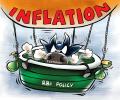
'While intensification of fuel prices and broad-based domestic cost pass-through pressures is a downside risk, core inflation is expected to strengthen further as demand recovers to pre-Covid levels,' the ministry said on Friday.

Despite Nirav Modi win, in the last five years, India managed to bring only about 20 fugitive offenders.

The ED case follows the police complaint for alleged criminal conspiracy and defrauding investors.

However, that could only be for sectors where 100 per cent FDI is allowed under the automatic route and pose no risk to national security.

Here's what some states are doing to get a grip on the situation. Ruchika Chitravanshi & Aneesh Phadnis report
 © 2025 Rediff.com - Investor Information - Advertise with us - Disclaimer - Privacy Policy - Sitemap - Feedback - About us - Terms of use - Grievances